Overview

Campus-Wide Certifications

Learn About Our Landscape

No Grass? No Problem!

Have you noticed some bald patches on the lawn, where the grass doesn’t grow? In the summer, when the trees are in full canopy, not enough sunlight reaches the ground to allow the grass to grow into a full cover. This causes the grass to grow in patches, and even then it cannot grow very tall because of the shade from the tree canopy.

Trees also soak up most of the water from rain and stormwater runoff, and grass struggles to grow in low moisture conditions. Did you know that a single beech tree with a 25 inch diameter will divert nearly 6,000 gallons of rainwater in one year? This is important to local ecosystems for many reasons. Stormwater often has a high pollution content, since water picks up pollutants such as oil as it washes across non-porous surfaces like asphalt. Trees soak up the water before it can carry those pollutants into local streams and waterways. Trees are also carbon sinks, meaning they sequester carbon from the atmosphere. Did you know that a single white oak tree with a 25 inch diameter sequesters over 1,250 pounds of carbon dioxide annually?

Trees are integral to our campus because of the ecological services they provide, and they are beautiful specimens that make our campus so inviting. Visit the National Tree Benefit Calculator to find out more about how trees serve local ecosystems.

Weeds and “No Spray” Practices

Do you think weeds are a nuisance? They can be, but here at Berea College we embrace all the plants that call our campus home. Many plants considered weeds are actually beneficial to local ecosystems and food chains. For instance, dandelions are some of the first plants to bloom in the spring, providing bees the nutrients to survive through the last cold snaps of the season. Other weeds you might find on campus that are beneficial to our wild friends are milkweed, which is essential to the survival of Monarch butterfly pupae, and wild clover, another favorite of bees and other insect pollinators.

We use “No Spray” practices on our main campus, which means that our Grounds Management Team does not use pesticides or herbicides to kill insects or plants. Many of these lawn care products contain toxic chemicals that can be absorbed by the skin, ingested, or inhaled. Such exposure has been linked to allergic reactions, cancer and birth defects. Therefore, we allow all native plants to grow, while maintaining a tidy landscape.

However, the Grounds Management Team does make an effort to remove non-native plants, as they can have detrimental effects on local ecosystems beyond their potential benefits to pollinators. Bush honeysuckle is one such non-native, “invasive” plant. Even though it blooms and provides nectar to insects and birds, it also chokes out native plants by growing more quickly. Find out more about non-native and invasive plants in your area by going to the National Invasive Species Information Center.

Pollinators and Way stations

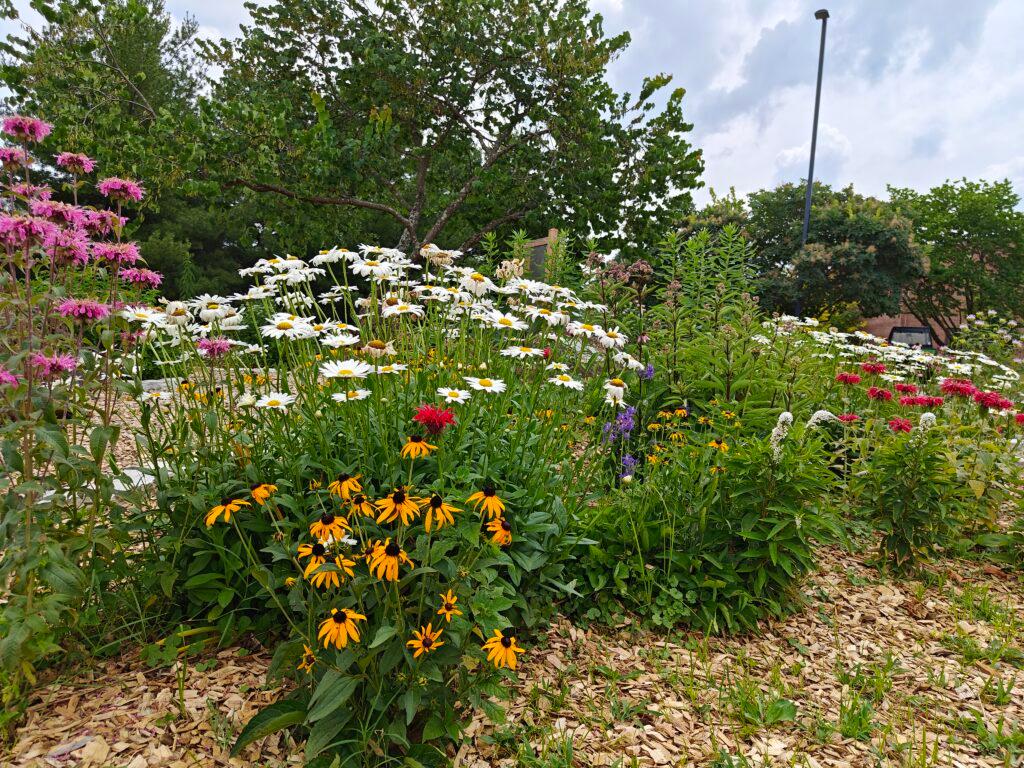
Have you heard the buzz? Bees are necessary pollinators to our native ecosystems.Unfortunately, bees are becoming endangered in many parts of America. In fact, seven species of bees were added in the Endangered Species List in 2016. Berea College is proud to host pollinator waystations on campus. Pollinator waystations are landscaped beds that have been planted with flowers that are attractive to pollinators, including bees, butterflies and even some birds. Without these pollinators we wouldn’t have the huge variety of flowers, fruits and vegetables that make up our food system. According to one study, “Honey bees contribute over $14 billion to the value of U.S. crop production,” making them invaluable to our current way of life.

In addition to purposefully landscaped beds, pollinators of all stripes (and feathers) enjoy blooms of all types, including many flowering weeds. Thanks to Berea College’s “No Spray” practices, all of these native plants are allowed to grow on campus for use by our wild neighbors.